

Decentralized control with industrial Edge Computing

We have replaced vulnerable, proprietary PLC systems with local intelligence on each feeder. The result is a future-proof feeding system with no single point of failure—where feeding continues uninterrupted even if the facility's network goes down.

Styringssystem

– Each feeder has its own brain

Each feeder (Aqua-Feeder™) runs its own independent control unit with a local database (SQLite). If the network is interrupted, the feeder continues to feed completely independently according to the set schedule.

– Full control and orchestration

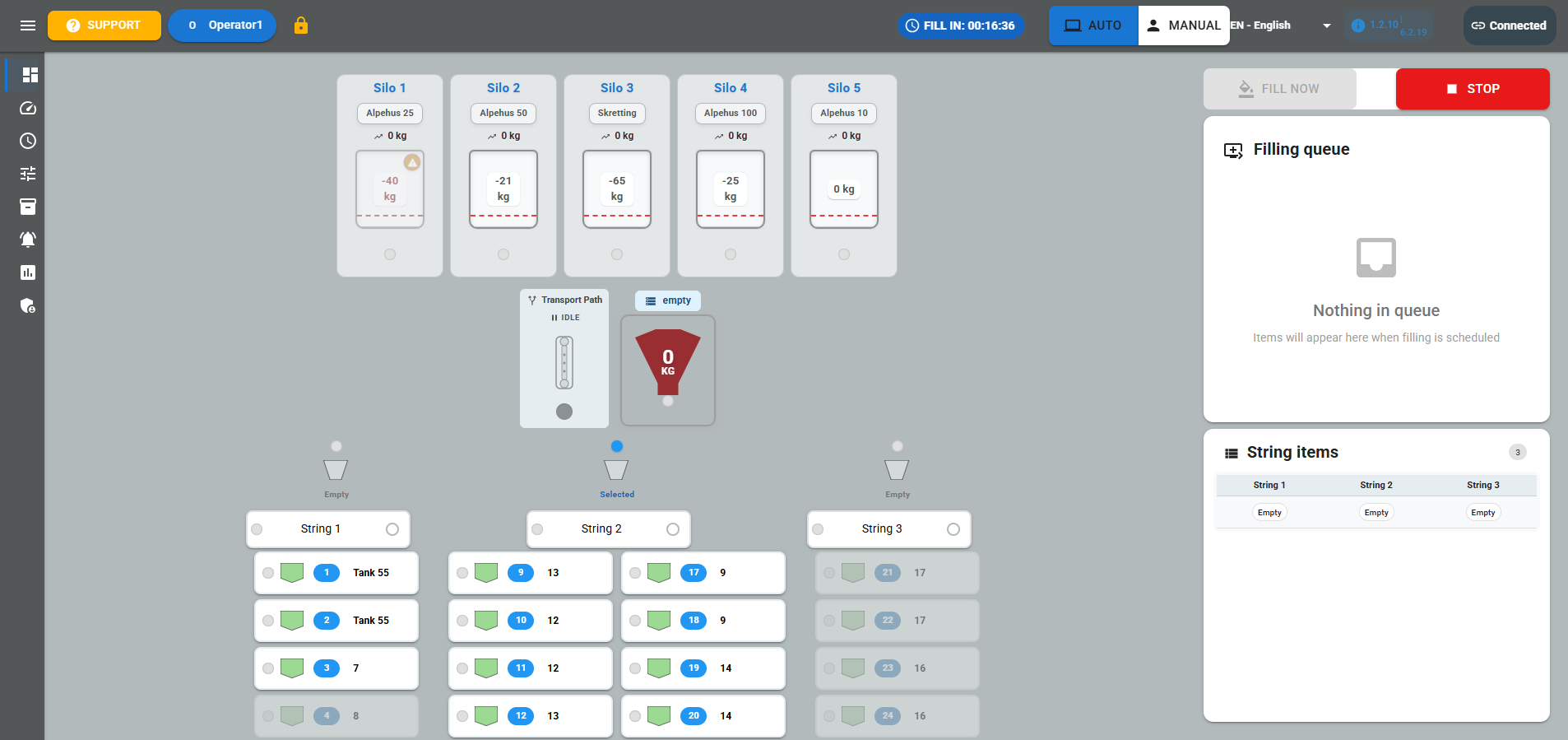
From the control room or tablet, AquaMaster gives you a real-time overview of all tanks and feeding lines. Here you plan meals, adjust appetite factors, and monitor alarms—all from one modern interface.

– You own the system and the data

We don't lock you into expensive, proprietary PLC licenses. Our platform is built on open industry standards like Node-RED, MQTT, and Modbus. This gives you a flexible system that is easy to customize and maintain.

– Lightning-fast support with zero wait time

With integrated Aqua-Gateway (encrypted VPN), our technicians can perform remote diagnostics and support within minutes. You won't have to wait for a technician to travel out to the facility to resolve the issue.

How the interaction works: From silo to tank

A two-part system built for maximum uptime. Here is how AquaMaster and the local feeders work together in practice:

1. Silo and Precision Weighing

The feed is stored in solid MAFA silos with First-In-First-Out (FIFO) rotation, ensuring that the oldest feed is used first. Integrated load cells weigh the feed with gram precision (±2%) before it is conveyed further into the transport line.
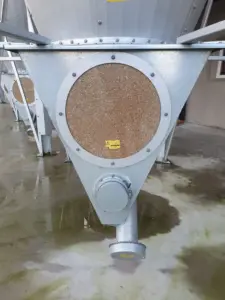
Referansebilde - utført prosjekt av Aquateknikk
Referansebilde fra prosjekt mellom Mowi og Aquateknikk

2. Gentle Feed Transport

The feed is efficiently transported to the tank building via feed lines. The system counts pulses (e.g., 9 pulses = 1 meter) to know exactly where the feed is in the transport line, featuring automated blockage detection that prevents feed dust and pellet breakage.

3. Local Feeding at the Tank (Aqua-Feeder)

When the feed reaches the feeder at the tank, the local Raspberry Pi unit takes over control. It runs its own independent logic and directly controls the dosing screw via a frequency inverter (Yaskawa VFD, etc.). Everything is logged in a local database (SQLite) and synchronized to AquaMaster via MQTT.


Tidligere arbeid utført av Aquateknikk

Ready for the technology of the future: AI camera and SCADA integration

Our open IoT architecture (MQTT and REST API) makes it easy to connect the feeding system with the facility's supervisory control systems (SCADA), or to adopt brand-new, revolutionary camera technology.

Dynamic feeding with ReelData-ReelAppetite (AI camera)

In collaboration with ReelData, we offer integration with advanced AI cameras for intelligent feeding management:

  • Real-time analysis in the tank: Cameras and AI models monitor fish feeding behavior and appetite in real time.

  • Automated adjustment: The feed amount is continuously adjusted based on actual fish intake, minimizing feed waste at the drain.

  • Seamless data transfer: Camera data is transferred directly into the feeding logic.

Seamless SCADA and data export

We believe that you should own your own data. Through open APIs, MQTT, and Modbus TCP, all feeding data, historical logs, and alarms can be pulled directly into the facility's supervisory SCADA systems or external analytics platforms.

Kjeks